Can You Use an SBA Loan to Flip a House?
GrantEstate · 4 min read
By Donato Stough, founder of GrantEstate in Flower Mound, Texas. Every program cited here links to its official source page — each was checked against the agency’s own site before it went in. More about why I built this →
SBA 504 is purpose-built for owner-occupied commercial property and is not available for investment real estate. Here is what actually funds a house flip.
Short answer: You cannot use an SBA 504 loan to fund a flip. The program is purpose-built for owner-occupied commercial real estate and is not available for investment property. SBA 7(a) is a general business loan guarantee, and a house you buy to resell is not an operating business.
This one gets repeated in Facebook groups until it sounds true, and it costs people real time — hours spent assembling a lender package for a program that was never open to them.
The distinction is simple and unforgiving: SBA real estate money follows occupancy.
Why does occupancy decide SBA eligibility?
Because the SBA's real estate programs exist to help businesses own the buildings they operate from, not to finance inventory.
Our database entry on the SBA 504 program states it directly: it is purpose-built for owner-occupied commercial real estate and major equipment, offers long amortization and a low down payment, and is not available for investment (non-owner-occupied) property.
The 7(a) entry explains the other half: 7(a) is a loan guarantee, not a grant, frequently used for owner-occupied commercial real estate, acquisition, and renovation, with the important note that your lender — not the SBA — underwrites and approves the loan.
So a flip fails both tests. You do not occupy it, and its value comes from the sale rather than from operations.
What if I flip through an LLC that is a business?
The entity does not fix it. The property use does.
Businesses that operate from a building, or hold property to produce income, are the ones the programs are designed around. A house held for resale is inventory to the IRS and to a lender, which is why the occupancy test fails regardless of how the LLC is structured.
If you want SBA money in real estate, the honest path is to buy a building you will use — a contractor's yard, a small office, a workshop with a residence above it. That is a legitimately excellent use of the 504 structure, and it is what the program was designed for.
So what does fund a flip?
Debt priced for the risk, and then cost-reduction money after you own it.
- Hard money and private lenders fund the purchase and rehab against the property, at rates that reflect how fast they can be repaid.
- Local rehabilitation money — CDBG-funded programs (HUD Exchange) list housing rehabilitation among their eligible activities, and local re-grants commonly run from roughly $50,000 to $1,000,000 depending on the jurisdiction. The catch is that you apply to your city or county, on their cycle, for a property that serves a low- and moderate-income objective.
- Utility rebates (DSIRE) for HVAC, lighting, and appliance work — non-competitive, and often lost because most programs require pre-approval before equipment is installed.
- Lead paint abatement, if the house predates 1978, is frequently paid for by HUD-funded local programs at no cost to the owner.
Notice that none of those are loans against the flip. They are cost reductions, which is exactly how they should be treated in your numbers.
Does the historic tax credit help a flip instead?
Usually not — and for the same reason the SBA programs do not.
The federal historic rehabilitation credit is 20% of qualifying work on a certified historic building, but it applies to buildings used in a trade or business or held to produce income. A house you renovate and sell to an owner-occupant is neither. The flipper's guide to the credit walks through when it does work.
The short version
SBA 504 and 7(a) are both built around business occupancy, so neither funds a flip, and no amount of LLC structuring changes that. Flips are funded by hard money, private capital, and your own equity — then improved by local rehabilitation programs, rebates, and lead paint funding that reduce the cost of the work. If you want SBA money in real estate, buy a building your business actually uses.
For the wider comparison, read how grants differ from loans and the investor funding guide.
Where to check this yourself
The primary sources behind this article are listed below. Program terms change, so confirm the current cycle and eligibility at the source before you rely on anything here.
- SBA 504 loan program — U.S. Small Business Administration
- SBA 7(a) loan program — U.S. Small Business Administration
Both are maintained by the agency that runs the program, not by us.
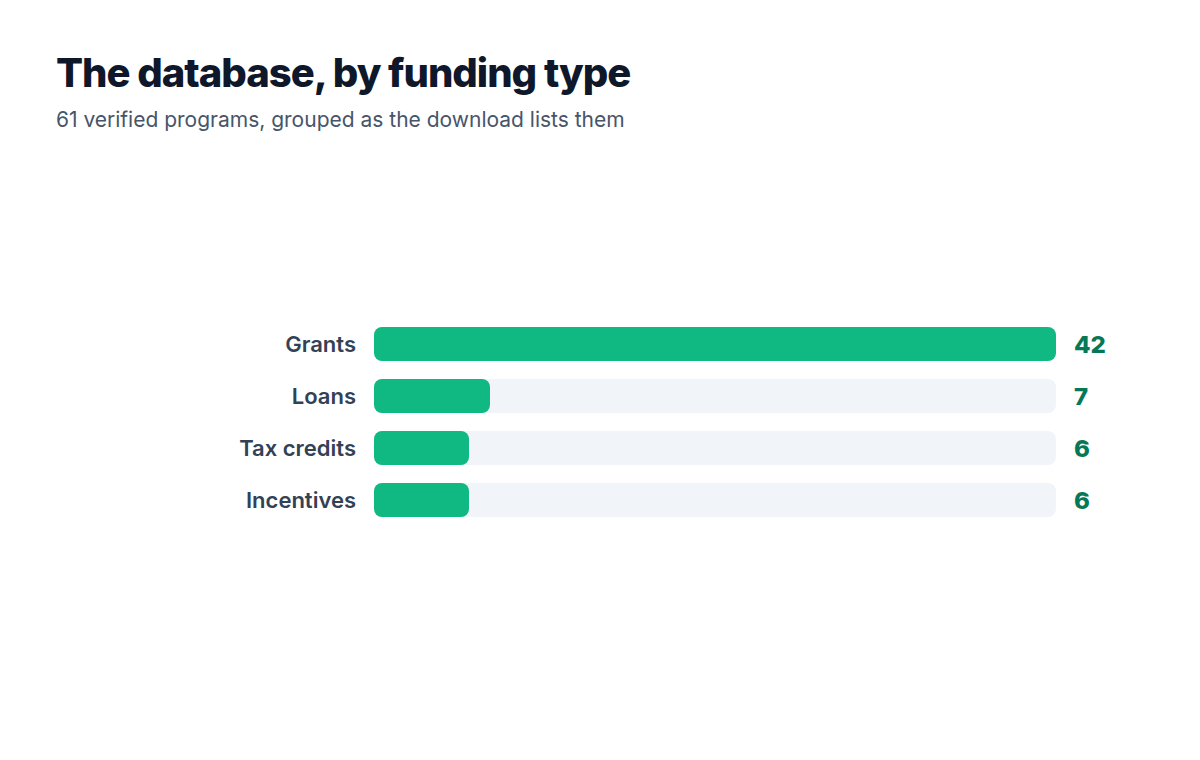
The Real Estate Grant Stack is a $49 downloadable toolkit that labels every one of its 61 programs as a grant, loan, tax credit, or incentive with an official link on every entry — so you can tell what actually funds property before you apply for the wrong thing.