USDA Rural Development for Rentals
GrantEstate · 4 min read
By Donato Stough, founder of GrantEstate in Flower Mound, Texas. Every program cited here links to its official source page — each was checked against the agency’s own site before it went in. More about why I built this →
Section 504 repair grants are for homeowners 62 and older. If you want rural rentals, here is where USDA money actually goes, and which program to ask first.
Short answer: USDA Rural Development is the best rural housing story and the worst place to look for a quick grant. Section 504 repair grants are small and limited to homeowners aged 62 and older. For rentals, the real money is Section 515 direct loans and housing preservation programs — loans, mostly, not cash.
Rural rental housing is the most under-served segment in American real estate, and USDA is the reason it exists at all. It is also the program set most often misread by investors, because the names sound interchangeable and the eligibility is not.
Read the eligibility line before anything else. It resolves which program is even open to you.
Are USDA grants available to investors?
Mostly no, and the specific reason matters.
Our database entry for USDA Single Family Housing programs is blunt: the Section 504 repair loans and grants are small historically, limited to a few thousand dollars per household, and reserved for homeowners aged 62 or older who cannot repay a loan. The entry says plainly that this is not a source of capital for investor-owned property.
So if you found a page promising rural repair grants for rental properties, you found a program that is not what it claims to be for you.
What USDA does have for rentals is a different structure entirely.
Where does USDA money actually go for rural rentals?
Into loans that make rural rental housing pencil, and into preserving the housing that already exists.
- Section 515 rural rental housing (USDA Rural Development) — direct USDA loans with long terms, the backbone of much of rural America's rental stock.
- Section 514 and 516 farm labor housing — direct loans and grants aimed at housing for farm workers, administered through the same rural development framework.
- Housing Preservation Grants — the entry lists these as modest and program-specific, aimed at preserving existing USDA-financed rental housing.
- Preservation of the aging Section 515 portfolio — our entry calls this a significant opportunity as the existing portfolio ages. That is a real, structural demand signal for operators who want to buy and rehabilitate rural rental property.
None of that is a cheque. All of it is cheaper capital with affordability conditions attached.
Why is rural rental housing preservation an opportunity?
Because the stock is old, the loans were made decades ago, and the properties have to be recapitalized or they are lost.
Our database entry frames preservation of existing USDA-financed rural rental housing as a significant opportunity. In practical terms that means properties with maturing debt, deferred maintenance, and owners who may want to exit — in markets where nobody else is competing.
The trade is the same one you make with any subsidized housing: you accept long affordability obligations and compliance work in exchange for a lower cost of capital and a market with fewer buyers.
What about the rest of the rural toolkit?
If your rural project is not a rental, three other entries apply.
- Community Facilities (USDA Rural Development) funds essential community buildings — healthcare, public safety, education, public services. If you are developing a facility a rural clinic, school, or municipality will occupy, the entry calls this a realistic structure.
- Rural Energy for America Program (USDA Rural Development) — our entry describes REAP as one of the few federal grants a for-profit rural business can apply for directly. It has historically covered up to 25% of project cost, with awards commonly in the $1,500 to $500,000 range, and it requires an energy assessment or audit for efficiency projects.
- State and local programs — rural projects also sit inside state housing finance agency priorities, covered in our state and local guide.
The short version
USDA Rural Development should be on every rural investor's list, but not because of grants. The grants are narrow: Section 504 repair money goes to elderly owner-occupants, not to landlords. The opportunity is in Section 515 rural rental housing, farm labor housing, and preservation of the aging USDA-financed portfolio — real capital with real affordability conditions, in markets where few investors are looking.
Where to check this yourself
The primary sources behind this article are listed below. Program terms change, so confirm the current cycle and eligibility at the source before you rely on anything here.
- USDA Rural Development — Multi-Family Housing programs — U.S. Department of Agriculture
- USDA Rural Development — Single Family Housing programs — U.S. Department of Agriculture
Both are maintained by the agency that runs the program, not by us.
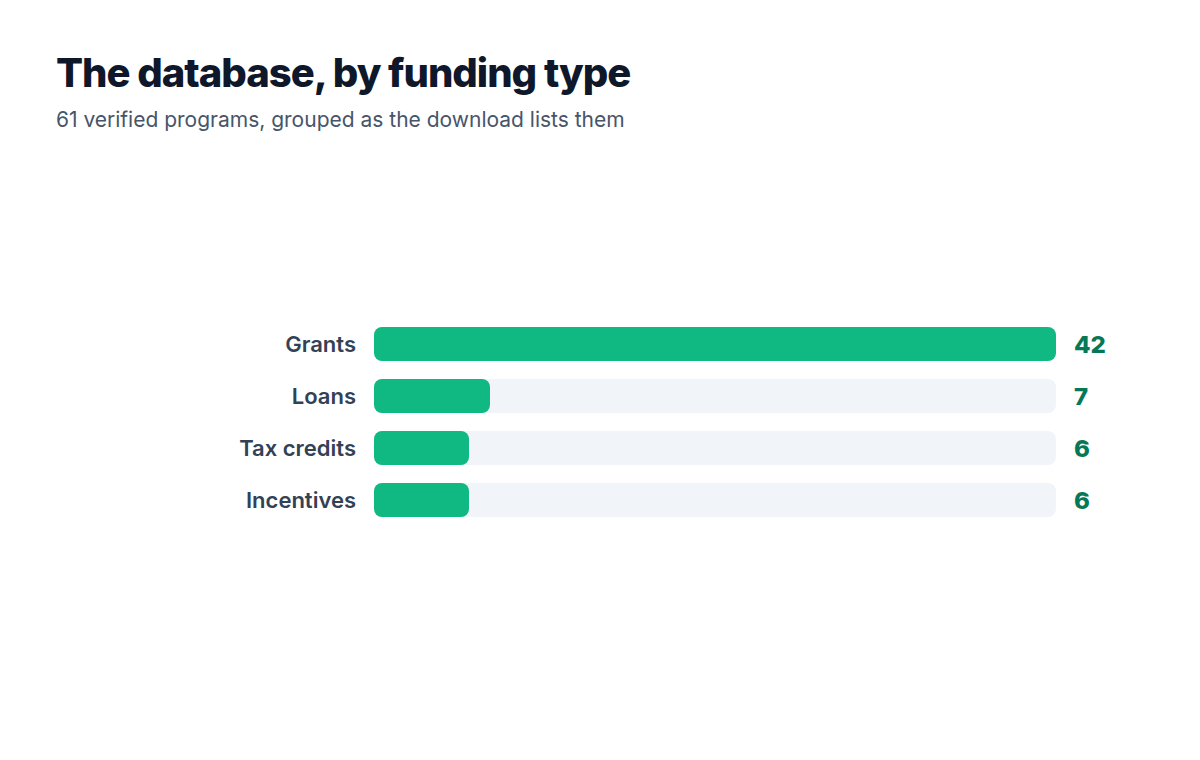
The Real Estate Grant Stack is a $49 downloadable toolkit that labels every entry as a grant, loan, tax credit, or incentive with an official source link — which is the only way to tell a rural loan program from a rural grant program before you spend a week on the wrong one.