Opportunity Zones for Real Estate Investors
GrantEstate · 5 min read
By Donato Stough, founder of GrantEstate in Flower Mound, Texas. Every program cited here links to its official source page — each was checked against the agency’s own site before it went in. More about why I built this →
Opportunity Zones are a capital gains tax incentive, not a grant. The benefit goes to the investor, not the developer. Here is how a deal attracts it.
Short answer: Opportunity Zones are a federal capital gains tax incentive, not a grant, and the tax benefit goes to the investor rather than to the developer. A developer attracts that capital by structuring a project so investors can put gains into a Qualified Opportunity Fund. The rules have changed since 2017, so verify the current terms.
Opportunity Zones are routinely described as a real estate program. They are better understood as an investor tax program that real estate development happens to serve.
Getting that direction right matters, because it changes what you are actually doing. You are not applying for something. You are building a deal that a particular kind of investor can use.
Who gets the Opportunity Zone benefit?
The investor with eligible capital gains, who invests those gains through a Qualified Opportunity Fund — a corporation or partnership that holds the project.
The developer's benefit is indirect and real: capital that would otherwise go to a different project, on terms that reflect the tax treatment. Our own database entry states it this way — the benefit accrues to the investor, not directly to the real estate developer, and developers attract Opportunity Zone capital by structuring the investment properly.
If you were hoping for a check from a government agency, there is no application to file. There is a fund to raise.
How does the tax benefit work?
In outline: an investor defers tax on a realized gain by rolling it into a Qualified Opportunity Fund, and can reduce or eliminate tax on the fund investment's own appreciation after holding it long enough.
That is the shape of it, and it is also where this article has to be careful, because the specifics are the part that moves. The program has been amended since it was created, and our database entry records plainly that its deferral and exclusion provisions have sunset or changed over time, that the rules are an area that continues to shift, and that expert tax advice is essential before you build a capital stack around it.
We are not going to restate numbers that may be wrong by the time you read this. The current rules are published by the IRS, and a qualified tax professional should apply them to your deal.
What property qualifies?
The project has to be in a designated low-income census tract, and for an existing building there is generally a substantial improvement requirement — meaning you cannot simply buy a building in a tract and call it an Opportunity Zone investment.
Two practical consequences.
Location is a screening criterion, not a selling point. Check the designation map before you commit to a site, and remember designations are a matter of federal record rather than local marketing.
Substantial improvement drives your budget. If the rules require you to invest an amount comparable to your purchase price into the building, that requirement belongs in your pro forma before you close, not after.
How does this compare with the historic credit and NMTC?
They solve different problems, and they are frequently stacked on the same building.
- The federal historic rehabilitation credit rewards rehabilitating a certified historic structure, regardless of census tract.
- New Markets Tax Credits deliver below-market capital to projects in low-income tracts through a Community Development Entity.
- Opportunity Zones attract investor equity to a project in a designated tract by changing the investor's tax outcome.
One adaptive-reuse project in a designated tract can use all three. That is also why the professional fees on such a deal are substantial — and why a developer who has never run one should expect to pay for expertise rather than improvise.
What should a developer do first?
Three steps, in this order.
- Confirm the site is in a designated tract before you spend money on design, using the federal designation records rather than a broker's summary.
- Talk to a tax adviser who has closed Opportunity Zone deals and ask what the current rules require of your specific structure, including the substantial improvement test.
- Find the investors, not the program. Opportunity Zone capital is raised from people with realized gains — often through fund managers, wealth advisers, and family offices — and that is a relationship-driven process with its own timelines.
If no investor with eligible gains is interested in your project, the designation adds nothing to your deal.
The short version
Opportunity Zones are a capital gains tax incentive aimed at investors, delivered through a Qualified Opportunity Fund, applied to property in a designated low-income census tract. The developer's return is cheaper capital, not a check. The rules have been amended and specific provisions have changed, so treat any summary — including this one — as a starting point and confirm the current terms with the IRS and a tax professional.
For where this sits among the other tools, read the commercial real estate guide and how grants differ from loans and credits.
Where to check this yourself
The primary sources behind this article are listed below. Program terms change, so confirm the current cycle and eligibility at the source before you rely on anything here.
- IRS — Opportunity Zones — Internal Revenue Service
- CDFI Fund — programs — U.S. Department of the Treasury
Both are maintained by the agency that administers the program, not by us.
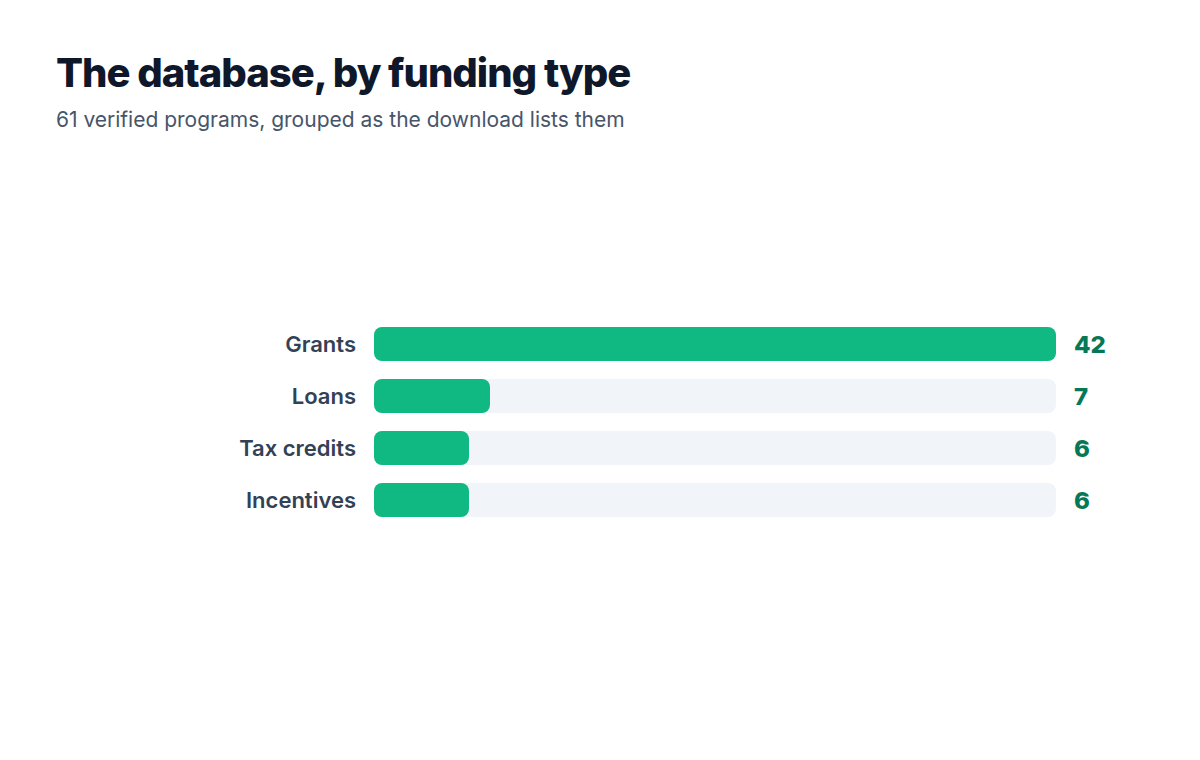
The Real Estate Grant Stack is a $49 downloadable toolkit covering 61 real estate programs, including Opportunity Zones, the historic credit, and NMTC, with the funding type labelled on every entry so grants are never confused with credits.