Pre-Development Funding for Real Estate
GrantEstate · 5 min read
By Donato Stough, founder of GrantEstate in Flower Mound, Texas. Every program cited here links to its official source page — each was checked against the agency’s own site before it went in. More about why I built this →
Feasibility studies, environmental assessment, design, and site work all cost money before a project can close. Here is which programs fund pre-development.
Short answer: Pre-development money — feasibility studies, environmental assessment, design, and site work — is genuinely fundable, but rarely as cash to a private developer. It usually arrives through a public agency or nonprofit partner, or as a form of financing tied to a specific site condition such as contamination.
The hardest money to raise in real estate is the money you need before the deal exists. You cannot mortgage a feasibility study. Lenders will not fund environmental assessment on a property you do not own.
This is the gap where public money is most useful, and where most developers look in the wrong place — because "pre-development grants" as advertised rarely exist, while the real programs are administered under names that have nothing to do with development.
What counts as pre-development cost?
Costs incurred before construction, and before a conventional lender will engage.
- Feasibility and market studies that tell you whether the project works.
- Environmental assessment — Phase I and often Phase II investigation of a site.
- Architectural and engineering design, including the drawings a lender or a public funder needs.
- Site work and due diligence — survey, geotechnical work, title, and zoning analysis.
- Capital stack assembly — the legal and advisory work that turns a plan into a closable deal.
Everything on that list is a real expense, and all of it is spent at risk. That is the problem these programs exist to address.
Which programs actually fund pre-development work?
The most accessible path is environmental. If your site has a history — a gas station, a dry cleaner, a foundry, a railyard — the assessment itself is fundable.
- EPA Brownfields assessment grants (U.S. Environmental Protection Agency) fund exactly the Phase I and Phase II work that makes a contaminated site investable. The applicant is usually a local government or a nonprofit, and the site you are interested in can be the one it assesses.
- EPA Brownfields cleanup grants and revolving loan funds carry a project further, and the revolving loan funds lend directly to owners and developers in many states.
- Economic development administration funding (U.S. Economic Development Administration) supports planning and economic adjustment work, often through a local government or regional organization rather than a private developer.
- USDA Community Facilities (USDA Rural Development) funds facilities in rural areas, and the pre-development work is part of the project it finances.
- Section 108 loan guarantees (HUD Exchange) can include pre-development costs inside a larger economic development project financed by a locality.
- Community development financial institutions and national intermediaries such as LISC and Enterprise Community Partners provide pre-development lending and technical assistance, which is often the most practical answer for a project with a community benefit.
Two more, in specific circumstances: DOE's state and community energy programs (U.S. Department of Energy) fund planning and energy work that can cover building studies, and the Historic Preservation Fund supports preservation planning, which matters if your project involves a certified historic structure.
Why does a public partner have to be involved?
Because that is how the money is written.
Federal grant programs generally define eligible applicants as units of government, tribes, and nonprofits. A private developer is frequently the reason the project happens and rarely the entity that can sign the application.
The practical version of this is a partnership: the city applies, and the work product — the assessment, the plan, the study — supports your site. That arrangement is normal, legal, and common. It also takes time, and it has to start before the deadline, not after.
If you are the one driving the project, your first meeting should be with your local economic development or community development department, and your question should be what they are already planning to apply for.
What if there is no program that fits your project?
Then pay for pre-development work the way everyone else does, and reduce the cost where you can.
- Negotiate a due diligence period long enough to do the assessment with your own money, and treat it as the cost of avoiding a bad purchase.
- Use the free research first — DSIRE for incentives that will reduce construction cost later, and the national brownfield resources before you commission your own environmental work.
- Ask a CDFI or an intermediary before a bank, because pre-development lending is a normal product for them and an unusual one for a conventional lender.
- Check the local historic status of the building early, since the historic rehabilitation credit can change the economics of the whole project.
The honest framing: pre-development money is usually not the thing that gets you funded. It is the thing that gets you to a decision — and a public partner who funds the assessment often becomes the partner who supports the project.
The short version
Pre-development funding exists mainly for the parts of a project that carry public risk: contaminated sites, planning work, and community facilities. It almost always flows through a government or nonprofit applicant, which means the skill you need is partnership rather than grant writing. For a private developer, the most reliable entry point is a brownfield assessment on a site you want, followed by pre-development lending from a CDFI.
Read how to apply for a real estate grant for the application process, and the brownfields guide if your site has a history.
Where to check this yourself
The primary sources behind this article are listed below. Program terms change, so confirm the current cycle and eligibility at the source before you rely on anything here.
- EPA — types of brownfields grant funding — U.S. Environmental Protection Agency
- HUD Exchange — Section 108 Loan Guarantee Program — U.S. Department of Housing and Urban Development
Both are maintained by the agency that runs the program, not by us.
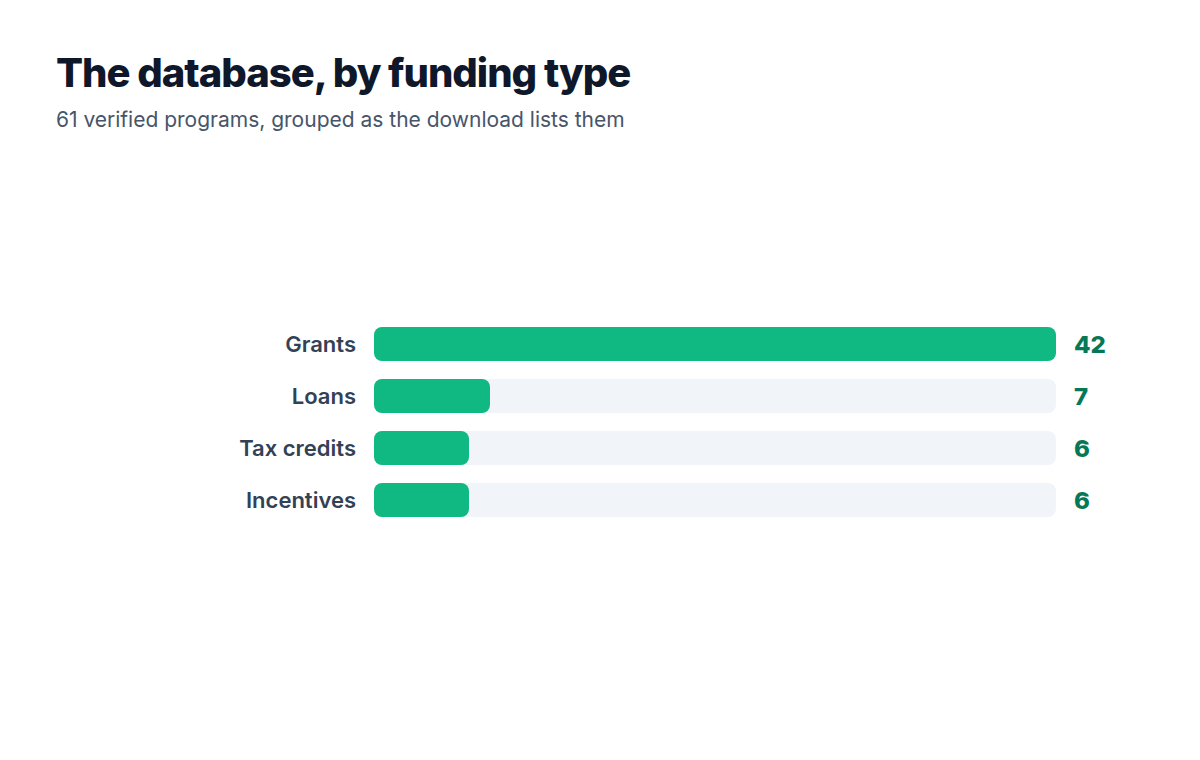
The Real Estate Grant Stack is a $49 downloadable toolkit that maps 61 real programs by asset type and purpose, with eligibility and an official link on every entry — so you can tell which pre-development costs in your project actually have a funder.